Back to previous
MEDIA RELEASE
Mar 31, 2025
MEDIA RELEASE
Mar 31, 2025
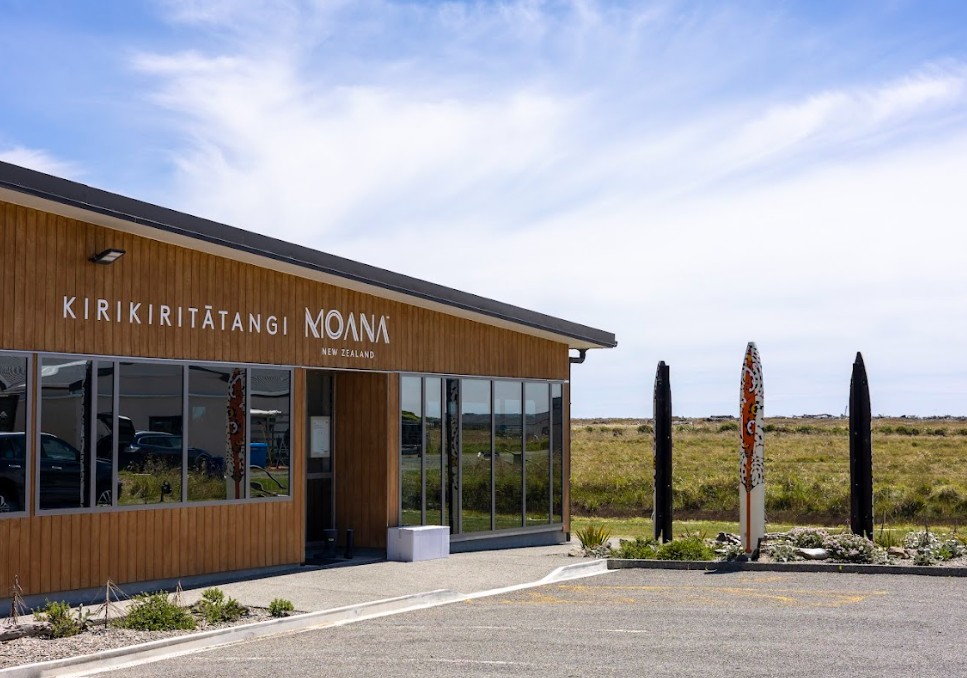
Kirikiritātangi is a ground-breaking, $5 million, purpose-built, tio (oyster) hatchery in Nelson that was built to support the increase of Moana New Zealand’s tio production capacity and ensure a reliable supply of oyster spat.
Moana New Zealand CEO Steve Tarrant says, “As a seafood business, we’re constantly innovating and thinking of ways in which we can improve our operations and lighten our touch on Papatuanuku as well as Tangaroa. Moana has always taken a long-term view with our aquaculture and wild harvest fisheries operations, and Kirikiritātangi was designed with that in mind.
“Our investment of $72,000 in a solar power system for our hatchery has produced some very exciting results. Over a 42-month period from August 2021 (when we first used our solar panels) to January 2025, our solar power system has reduced our carbon footprint by 23 tonnes of CO₂. For the business, we’re thrilled to see the system perform so well by reducing emissions for just this one site, which is equivalent to the work of nearly 1,000 mature trees in a year, given that a single mature tree absorbs around 25kg of CO₂ annually.”
The use of solar energy reduces carbon emissions because it displaces electricity that would otherwise come from the national grid, which has a carbon footprint. In New Zealand, every kilowatt-hour (kWh) of electricity supplied from the grid results in 0.08 kg of CO₂ emissions, according to the Ministry for the Environment. By generating and using solar power instead of drawing from the grid, the hatchery is contributing to a lower overall carbon footprint for the business.
Mr Tarrant adds, “We’ve also made good progress to recover a portion of that cost over the past 3.5 years. With increasing electricity costs I’d expect we’d recover the remainder of that investment in another three years. At times, we’ve generated enough energy to return some back to the grid.
“What that looks like in actual numbers is from August 2021 (our first month of usage) to January 2025, we generated 271,187kWh of electricity, resulting in cost savings a little over $31,400.
“Moreover, we sent 21,871kWh back to the grid and received a $1,746 credit. In total, these savings amount to over $33,000 for the 42-month period.”
In addition to the solar-generated savings, Moana has designed a building that operates within its own ecosystem as much as possible, creating a heating system that recycles and redistributes heat to help rear the oyster larvae and spat.
“Growing baby Pacific oysters in a hatchery and nursery requires a lot of energy as they like to grow in really warm water,” says Mr Tarrant.
“When we thought about where else heat and energy could be captured and then distributed, we included a system that helps retain heat from our large greenhouse space and installed a fan to drive that heat from the greenhouse into the production spaces. Our heat pumps also use the warm air drawn from the ceiling in the greenhouse to heat the water rather than just using the ambient external air, which can fluctuate throughout the year and makes us more self-reliant and less dependent on external resources.
“With all the energy-saving features, Kirikiritātangi also collects rainwater for use throughout the facility. Its wooden framework is a special LVL material, which looks like plywood but is actually made up of layers of thin veneer strips that are glued together, which is extremely strong and durable—and is also more rust resistant than steel. What’s more, it’s created from a renewable local resource, Nelson Pine.”
ENDS
About Moana New Zealand
Iwi are the true guardians of the world’s most pristine and sustainably managed fisheries. Moana New Zealand is the largest Iwi-owned seafood business in Aotearoa. It has a deep sense of responsibility to all people, respect for kaimoana and kai ora, and is dedicated to the wellbeing of future generations. It connects the world to the taste and magic of New Zealand’s best kaimoana. Moana New Zealand is the only kaimoana business in the Southern Hemisphere that produces Pacific oysters end-to-end, from rearing larvae at the hatchery, ensuring viability through the juvenile phase to growing to maturity on farm through to processing.
For footage and b-roll click here.
All media enquiries, please contact:
May Tien, Communications Manager
m 027 880 4522
e may.tien@moana.co.nz