Our Wild Harvesting Techniques
Where We Fish
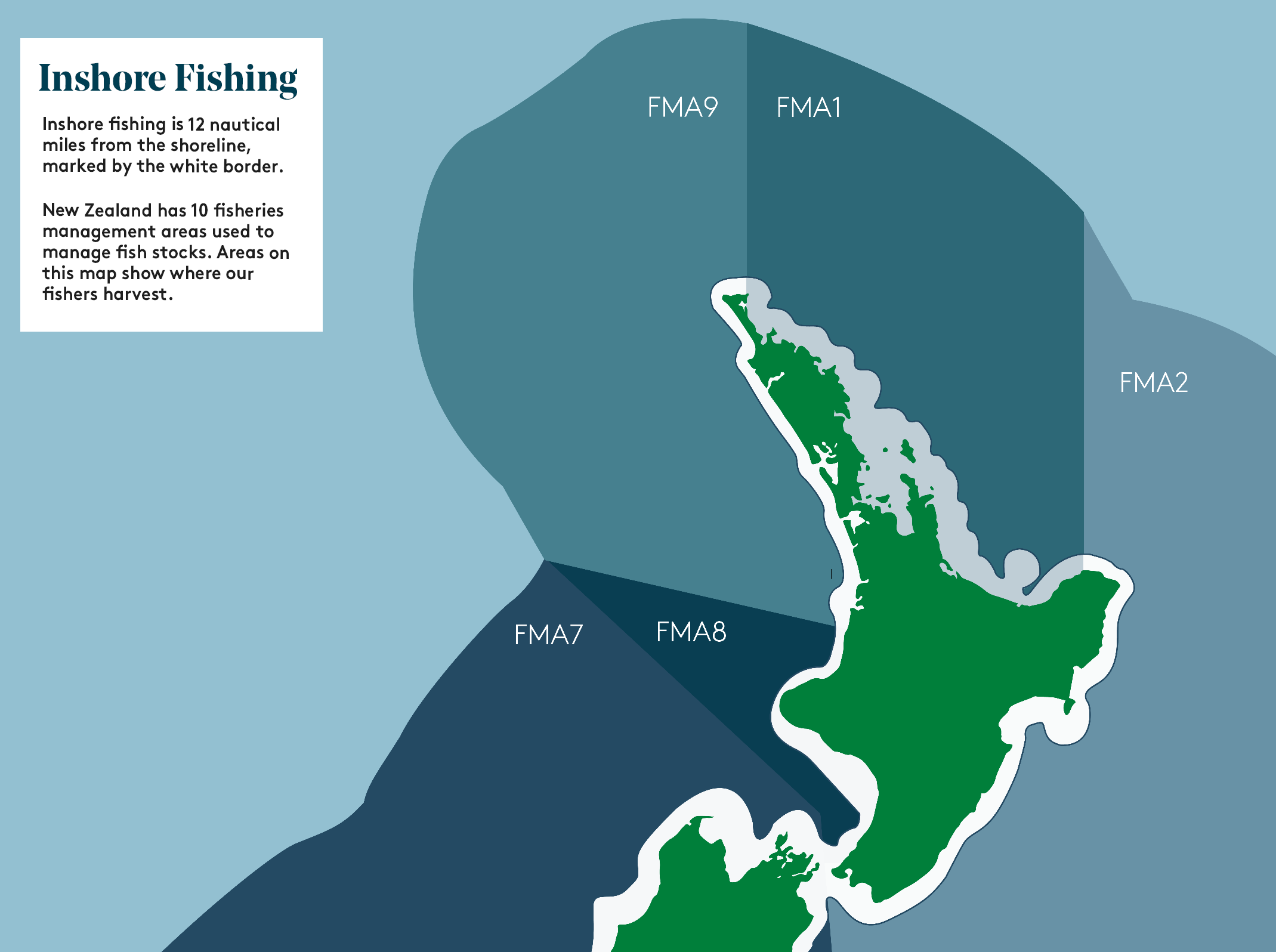
Moana New Zealand specialises in inshore fishing around the North Island of New Zealand. Inshore fish species dwell mostly within 12 nautical miles from the shore where you’ll find snapper, trevally, gurnard and tarakihi thrive here as well as many other lesser known species such as gemfish, ling and John dory.
At Moana, we don’t own any fishing vessels. We choose to work with regionally based fishers and businesses helping support local communities and economies.
Our fleet of contract fishers are an important part of our work whānau, and they believe in responsible fishing as much as we do.
Learn more about Moana’s responsible fishing initiatives and on our YouTube channel for more information.
For more facts and figures on bottom contact fishing, visit
Seafood New Zealand
and
Ministry for Primary Industries.
Bottom Trawling
Bottom trawling, is a practical and efficient fishing method where a net is towed on or near (approximately one metre off) the ocean floor, where large amounts of popular fish species live. For inshore fishers, the fishing using occurs over muddy, sandy ocean floors. Less than 2% of New Zealand's ocean is trawled annually. At the same time, 31% of New Zealand's waters are closed to bottom trawling.
More than 70% of Moana's wild harvest is caught by bottom trawling. Our contract fishers use their indepth knowledge combined with technology to precisely locate schools in known fishing grounds, avoiding benthic features and having the opportunity to monitor and adjust each trawl. Their gear has progressively improved and become lighter with less bottom contact, which saves on fuel costs. A number of our contract fishers also have
FloMo
installed.
Longline
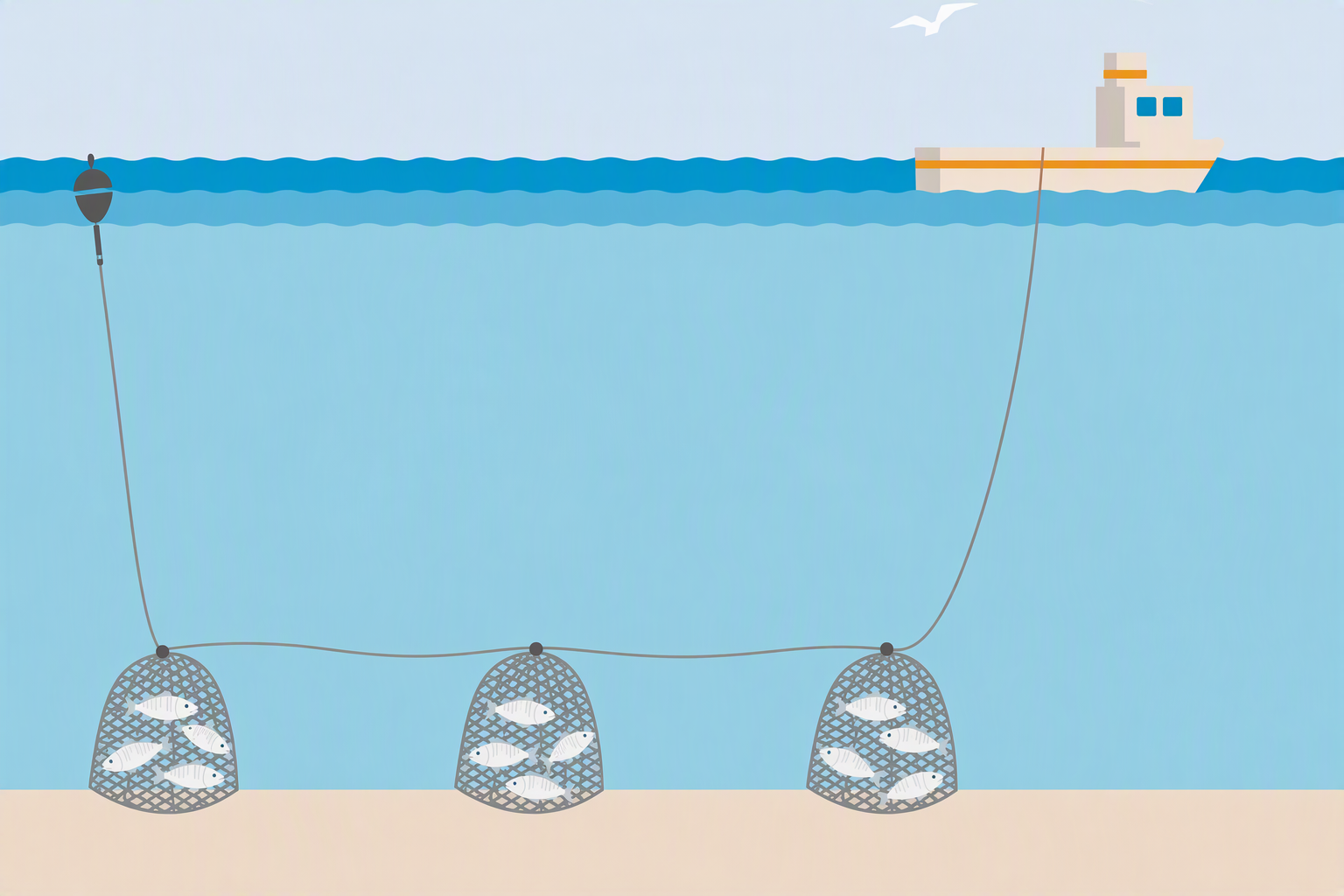
Longline fishing involves setting a long main line through the water, with hundreds or sometimes thousands of individually baited hooks attached on smaller lines called snoods. A single line can extend for 1 to 12 nautical miles (2–22 km) and carry between 300 and 5,000 hooks, giving a sense of the scale of the operation. Anchors hold the line in position, while buoys mark it at the surface so it is visible to other vessels. Depending on the target species, the line may sit on the seafloor or be suspended above it.
Inshore longlines typically fish at depths of 10 to 180 metres, primarily for snapper, while lines set in waters deeper than 180 metres target species including hāpuku, bass and bluenose. Longline-caught fish are highly regarded for their freshness and quality.
Danish Seine
Danish seine gear is deployed with one end of a weighted rope attached to an anchor buoy. As the vessel sweeps in a large circle the rope is deployed sinking to the bottom, followed by the Danish seine net and another weighted rope until the vessel returns to the anchor buoy.
Once a full circle has been made the gear is towed until the ropes come together. The towing operation then ceases and the net is winched back onto the vessel scooping up fish that have been herded into its path by the ropes coming together on the bottom.